The Ferntree Gully Drain Plumber — Drains Are All We Do
Plenty of people who search for a plumber in Ferntree Gully are not standing over a textbook blockage. They have water arriving somewhere it never used to, a downpipe discharging against a wall, a shower that fills, or a yard that has stopped draining. So it is worth saying plainly what we cover before the rest of this page gets into the detail: drains, and only drains.
Drainage is not a sideline here, it is the entire business, which is where all the heavy equipment lives — 5000 PSI jetting, root cutting, CCTV camera work, pipe locating and trenchless relining. Across 3156 that covers blocked drains and blocked sewers, blocked toilets, sinks, showers and basins, stormwater pits, downpipe lines and yard drainage, overflow relief gullies, and marking a buried line before a shed, deck or extension goes over it. Nothing beyond drainage, and if a job is outside that scope you will hear it on the phone rather than after we have arrived. Doing one trade all day is precisely why the diagnosis is sharper on ground like this. Jack is a BPC Registered Plumber and attends personally, so the person quoting the work is the person doing it.
One Fixture, or the Whole Property?
Thirty seconds of walking around before you call changes what we bring, how urgent it is, and often what the answer costs you in disruption. Count how many fixtures are misbehaving.
Five Things Worth Doing Before We Get There
Whether it is a backed-up sewer or water building up outside during a storm, these buy you time and limit the damage.
- Cut off everything that puts water in. Taps off, and stop the washing machine and dishwasher mid-cycle if you have to. Both discharge a large slug in one go, and a stopped line has to put that somewhere.
- Resist the confirming flush. The flush people use to check whether a toilet has cleared itself is the one that usually reaches the floor.
- Get outside and look at the grated fitting near the house. That is the overflow relief gully, deliberately set below floor level so a surcharge escapes into the garden and not down the hallway. If it is bubbling it is doing its job. Never build over it, pave it in or stand pot plants on it.
- If rain is the trigger, walk the surface drainage. Lift the grates you can reach, pull the leaf mat off, and check whether downpipes are actually discharging into their pits rather than beside them. On a sloping Ferntree Gully block that two-minute check can stop water reaching the building.
- Skip the drain chemicals. They will not shift roots, compacted silt or hardened grease, and all they achieve is leaving a caustic pool for whoever opens the line next.
Wastewater rising inside the building is an emergency at any hour of the night. Ring 0425 226 636 and describe what you can see.
The Ferntree Gully Year — A Warm-Season Flood Risk
Most drainage advice assumes winter is the dangerous season. Here the risk profile is tilted differently, and it is worth planning around.
🌱 Spring
Flash flooding season begins, according to the local flood guide, and root growth resumes at the same time. A sewer cleared over winter starts closing again if the gap the roots came through was never sealed. Double exposure, and the busiest quarter of our year in 3156.
☀️ Summer
The other half of the flash-flood window. Hard, dry ground sheds a sudden storm instead of absorbing it, so the whole burst arrives at the pits at once. Kitchen waste lines also narrow faster while there is less water going through them.
🍂 Autumn
The maintenance window. Leaf loading peaks and, on sloping ground, it does not stay where it lands. This is the cheapest month of the year to have gutters, grates and pits emptied and a stormwater line checked properly.
❄️ Winter
Long soaking rain rather than sharp bursts. It is less likely to overwhelm the system outright, but it finds every line running below capacity and keeps finding it for weeks, which is when slow yard drainage becomes obvious.
Whose Pipe Is It? The Ferntree Gully Answer
Four parties can be involved in a single drainage complaint here, and ringing the wrong one first costs days. This table sorts it.
The term Knox uses for that last handover point is worth learning, because it appears on permits, plans and council correspondence. Knox puts it this way: every property is given a point to direct its stormwater runoff, and this is known as an Approved Point of Discharge, or APD. Downpipes, surface grates, yard pits and the pipework connecting them to the APD all belong to the property. What sits past that point does not.
Knox is also unusually direct about what it will and will not do beyond that. Its published position, in one sentence, is that household drainage infrastructure is not something the council carries a legal responsibility to keep in repair. There is no ambiguity there, and it is worth absorbing before lodging a request in the expectation that a crew will arrive with a jetter. If your own stormwater line is silted or root-bound, that is a plumbing job.
Finally, the design standards. Knox provides flood protection to a 5-year ARI level in residential areas and a 10-year ARI level in commercial ones, while Melbourne Water takes on catchments above 60 hectares and works to a 10-year through 100-year ARI range. Those are deliberate engineering choices, not failures. But they mean a Ferntree Gully street can carry water briefly in a genuinely big storm with nothing whatsoever blocked. The line that matters to you as an owner is this: if your property holds water in ordinary rain, that is not the network being exceeded, that is your own drainage being restricted.
Renting in Ferntree Gully? The drainage is part of the building, so repairs generally sit with the owner, with the usual exception where the blockage was obviously created by something that should never have gone down the pipe. Tenants: put it in writing to the agent so it carries a date, take a photograph of what you can see, and let the owner arrange the trade. Owners and managers: ask for the camera recording. Footage is the one thing that reliably tells a failed pipe apart from a misused one. Our guide on who is responsible for a blocked drain goes through it in detail.
Signs a Ferntree Gully Drain Is Heading for Trouble
Some of these send people straight to the phone. Others get lived with for a year before anyone connects them to a pipe.
- Noise passing between fixtures — empty the bath and a basin gulps back at you, or flush and hear the floor waste answer. See why drains gurgle.
- Water arriving somewhere new during rain — under a deck, along a retaining wall, or across a garage slab. On sloping ground this is usually redirection from a blocked pit, not rising groundwater.
- The yard gully spilling — your overflow relief gully is surcharging outside so it does not surcharge inside. Urgent.
- A downpipe that overshoots its pit in heavy rain — either the pit is full or the line below it is restricted. Easy to see, easy to ignore.
- The same drain closing over on a schedule — each spring, or after every heavy storm. That is a defect keeping an appointment, not bad luck.
- Odour that comes and goes with the weather — see why drains smell.
- The kitchen sink losing a little more speed each month — cooled fat closing the bore from the wall inwards. See kitchen sink draining slowly.
How We Clear a Blocked Drain in Ferntree Gully
1️⃣ Establish which system we are in
Rain or waste, branch or main, and where the line opens up. On a terraced block that has been landscaped more than once, simply finding the access is often the first real task of the day.
2️⃣ Pick the machine for the material
Soft local obstructions come out on a drain machine. Root mass, packed slope silt, scale and set grease get 5000 PSI jetting, which scours the wall itself rather than boring a passage through the middle of the debris.
3️⃣ Put the camera back through it
With the line running and nothing in the way, the CCTV camera reads the pipe wall properly and records the finished bore either side of the trouble. That recording is yours to keep.
4️⃣ Tell you the cause, straight
A fracture, an opened socket, a badly made connection, a pit that has failed — you get told what the footage shows, including the times when the honest advice is to leave it alone and watch it.
Watch a Real Ferntree Gully Drain Job
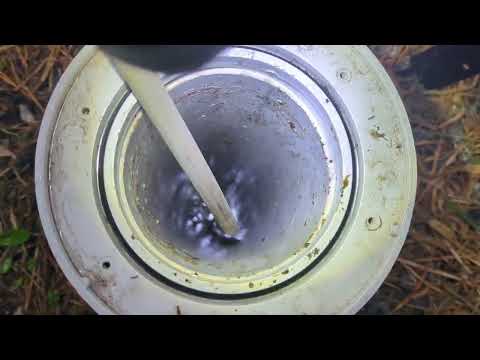
This is a Ferntree Gully sewer that had stopped because of poorly made pipe connections underground, found on the camera and then jet-blasted clear. It is a good example of why the camera matters: badly formed joints will keep catching material forever, and no amount of clearing from the surface tells you they are there.
When Clearing Becomes a Subscription — Relining in Ferntree Gully
There is a point at which opening the same line again is not maintenance. If a drain here has closed over twice in the same location, the pipe is the problem and the material inside it is just the symptom that keeps announcing it.
Relining repairs the run from the inside, with nothing dug up. A resin-saturated liner is drawn through the damaged length, pressed hard against the host pipe and cured in place, so an open socket, a hairline split and a rough patch of wall all end up behind one continuous new surface with nothing to catch on and nowhere for roots to re-enter. On the terraced, retained and heavily planted blocks that are typical of the streets below the ranges, that matters more than usual — excavating a line on a slope frequently means dismantling retaining work and landscaping that cost far more than the pipe did.
It is not the answer to everything. Where a section has genuinely collapsed, been crushed, or lost its fall so badly that water will not run, replacement is the honest recommendation and we will say so. The camera decides that, not a guess. See pipe relining, and our side-by-side look at relining versus replacement.
What We Unblock in Ferntree Gully
Across 3156 the same handful of jobs come round again and again.
🌧️ Blocked storm water, Ferntree Gully
The headline job in this suburb. Grit and leaf litter packed into pits, downpipe lines that have silted, and outlets that have partly given way. It shows outdoors first: water against the house, across a slab, or standing on a lawn that used to drain. See stormwater drains.
🚽 Blocked toilet, Ferntree Gully
Wipes and paper if it is local. If the shower rises when you flush, the toilet is only reporting a problem that lives further down the shared line. See blocked toilets.
🪣 Blocked sink, Ferntree Gully
Warm fat goes down and sets on the wall, taking a fraction of the diameter each week until an ordinary washing-up tips it over. Basins do the same thing with hair and soap scum. See blocked sinks and blocked basins.
🌳 Blocked sewer, Ferntree Gully
The whole-house version, because every fixture discharges into one pipe and that pipe has stopped. Roots at a moved joint are the usual finding. Jetting plus a camera. See blocked sewers.
🚿 Slow shower or floor waste
Almost always hair bound into soap within the first metre, unless the rest of the house is complaining too. Quick to fix properly, and worth doing once rather than repeatedly. See blocked showers.
🚨 Emergency plumber, Ferntree Gully
Sewage indoors, everything stopped together, or a storm putting water where it must not go. Around the clock for genuine emergencies, and you speak to Jack. See emergency blocked drains.
Blocked Drain Services We Provide in Ferntree Gully
- Stormwater and rainwater drainage — pits, downpipe lines and yards that will not clear
- Stormwater health check — best done in autumn, ahead of the spring burst season
- Blocked drains — same-day clearing across 3156
- Blocked sewers — whole-property blockages, cleared and filmed
- 24/7 emergency blocked drains — the number for when it cannot wait for morning
- CCTV drain inspection — see the cause and keep the footage
- Hydro jet drain cleaning — roots, slope silt and set grease at 5000 PSI
- Blocked toilets, sinks, showers and basins
- Pipe locating — route and depth marked before you dig, build or landscape
- Pipe relining — trenchless repair that leaves terracing and gardens alone
- Drain smoke testing — traces cracks, wrong connections and the source of a smell
- Commercial drains — shops and food premises around Mountain Gate and the Ferntree Gully centres
- Pre-purchase drain testing — look at the drains before settlement, not after
5 February 2011 — 140 Millimetres in Twelve Hours
Ferntree Gully has something almost no other suburb in Knox has: its own dedicated local flood guide. VICSES publishes a guide titled Upper Ferntree Gully at Knox, with content reviewed in July 2025, rather than folding the suburb into a shared district document the way it does for most of the municipality. That on its own tells you the flood risk here is considered specific enough to deserve its own treatment.
The guide's account of the worst recorded event is blunt. It records that "The 5 February, 2011 flood event was one of the most significant in the area. Upper Ferntree Gully received a massive 140 millimetres of rainfall in just 12 hours." It also sets out the general rule for the area: "Moderate to heavy rainfall over a period of 12 hours or more usually results in severe flooding in the area."
What happened on the ground that day is listed road by road. Closures included Burwood Highway at Hilltop Road, Upper Ferntree Gully; Burwood Highway at Station Street, Ferntree Gully; Brenock Park Drive; Forest Road at the Railway Underpass; and Mountain Gate Drive. Ferntree Plaza Shopping Centre appears in the guide as community infrastructure likely to flood.
Read those names together and a pattern falls out. They are the low points: highway dips, an underpass, and the crossings where a main road meets a drainage line. Water in this suburb does not spread out slowly, it collects at the bottom of things. Your own block obeys exactly the same logic on a smaller scale — the lowest opening on the property is where a stopped line will show itself, which is usually a shower base indoors and the overflow relief gully outdoors.
Living Below the Ranges — Why Runoff Here Arrives All at Once
Ferntree Gully sits at the foot of the Dandenongs, and the topography does more to shape drainage calls here than the age of the housing does. Burwood Highway and Ferntree Gully Road converge at Mountain Gate; the land climbs east from there through Upper Ferntree Gully, where the 1000 Steps and Kokoda Track Memorial Walk leaves the Ferntree Gully Picnic Area at Mount Dandenong Tourist Road and Burwood Highway, and drops away west toward Scoresby Road, which forms the suburb's western boundary. That is a lot of vertical difference inside one postcode.
Steep ground does two things to a drainage system. First, it delivers water fast: rain that falls on the upper streets is at the bottom of the catchment in minutes rather than hours, so a pipe that copes fine with a long steady drizzle can be overrun by a short violent burst. Second, fast water carries material. Grit, sand, leaf litter and garden mulch are picked up on the slopes and dropped the moment the grade flattens out, which is why the pits that silt up worst are rarely the ones at the top of the hill.
There is a timing quirk here too that catches people out. The flood guide notes that flash flooding in this area "usually occurs in spring and summer" — which is the opposite of the assumption most homeowners work from. Winter rain is what everyone braces for, but the events that put water through a Ferntree Gully doorway have tended to be the sharp warm-season downpours landing on ground that has already dried and hardened off. Practically, that means the sensible time to have a stormwater line checked is not the first cold week of June. It is well before it.
The other half of the picture is what happens above the surface. Steep blocks are usually terraced, retained and landscaped, which means surface water gets channelled deliberately, and any pit or agricultural line built into that landscaping is now part of your drainage system whether or not anyone still remembers installing it. On a slope, a single blocked pit does not just pond — it redirects, and the water finds the next lowest thing, which is frequently a garage slab or the underside of a deck.
The Water Storage Off Wrexham Road
One piece of infrastructure worth knowing about, because it surprises people who have lived here for years. South East Water operates the Knox Water Storage site off Wrexham Road, Ferntree Gully, and it is the location of the new Northern Hypochlorite Storage Facility, which will deliver chlorination to South East Water's northern service area. Investigative works started on 5 May 2025, and construction is scheduled from April 2026 for about seven months, with site access via Wrexham Road and Stephen Road.
For a homeowner nearby, the relevance is mostly practical. Extended construction traffic on residential streets means more grit and sediment washing into kerbs and pits than usual, and the pits nearest a haulage route tend to be the first to fill. If you are on Wrexham Road, Stephen Road or the streets feeding them, it is worth lifting your own grates once or twice over that period rather than waiting to discover them full. It also reinforces something worth repeating: South East Water is the water and sewerage authority for this part of Knox, not Yarra Valley Water. Their number is 132 812.
How Ferntree Gully Was Built, and What That Left Underground
The bones of the suburb go back a long way. A school was operating by 1880, and the Shire of Fern Tree Gully was proclaimed on 30 May 1889, covering 390 square kilometres and a population of about 750. The railway reached here the same year, extended from Ringwood through to Upper Ferntree Gully, and was electrified in 1929. The national park was declared in 1927. Census counts show how slowly things moved at first: 766 people in 1891, about 1,000 in 1933, then 1,947 in 1947, according to the Victorian Places project run by Monash University and the University of Queensland.
Then the post-war decades arrived and the pace changed completely. A kindergarten opened in 1949, a boys' technical school and a second primary school both in 1954. By the 2011 Census the population was 25,585. One detail from that era is specific to this suburb and worth flagging: in 1954 the State Government enacted planning controls over excessive subdivision here. Ferntree Gully was being cut up faster than services could follow, and the response was regulatory.
That history is not trivia when you are standing over an open inspection opening. It means a single Ferntree Gully street can hold pipework from several different eras sitting side by side, with different materials, different depths and different connection details. Older jointed drainage is assembled from short sections with a socket every metre or so, and each socket is a place where ground movement can open a gap. Newer work is more often continuous plastic. Neither is a safe assumption, which is precisely why we put a camera in rather than an opinion.
Frequently Asked Questions — Ferntree Gully
Blocked Drains in Suburbs Near Ferntree Gully
Postcode 3156 is a big one. Upper Ferntree Gully climbs toward the national park and Angliss Hospital at 39 Albert Street, while Lysterfield and Lysterfield South spread out on much larger blocks to the south, where private drainage runs longer and access matters more. All three are the same trip and the same equipment for us.
Immediately around the suburb, Boronia sits to the north and Knoxfield, Scoresby and Rowville spread west and south onto flatter ground. Climb east instead and Upwey and Tecoma begin the ranges proper, where slope and narrow access change the job again. Everything on this list falls under the same Knox drainage rules and the same South East Water contact, so the advice above holds across the lot.
Need a plumber in Ferntree Gully today?
Free diagnosis over the phone, same-day attendance in most cases, and 24/7 for genuine emergencies. You talk to the plumber who does the work.
📞 Call Jack — 0425 226 636Sources for the local information on this page: VICSES Local Flood Guide, Upper Ferntree Gully at Knox (content reviewed July 2025), for the 5 February 2011 rainfall figure, the 12-hour rainfall statement, the spring and summer flash flooding note, the named 2011 road closures, Ferntree Plaza Shopping Centre and the roads likely to flood; South East Water on the Knox Water Storage site and the Northern Hypochlorite Storage Facility at Wrexham Road; Knox City Council drainage guidance, the Approved Point of Discharge definition, household drainage responsibility and flood protection standards, and the referral to South East Water on 132 812; Melbourne Water catchment responsibilities; Victorian Places (Monash University / University of Queensland) for the school, the 1889 proclamation of the Shire of Fern Tree Gully, the railway, the 1954 planning controls and the census populations.